





Best ergonomic chair for long hours of work in South Africa: a buyer's guide
If you're sitting 8, 9, or 10 hours a day, your chair isn't just a piece of furniture. It's occupational equipment. And most people are using the wrong one.

The difference between a chair that gets you through a long day and one that leaves you stiff, sore, and unproductive by 3pm comes down to a handful of specific design decisions: how the mechanism moves, where the lumbar support sits, how many ways the chair adjusts to your body. These aren't marketing features. They're the engineering choices that determine whether your spine is supported or slowly loaded with stress across a full workday.
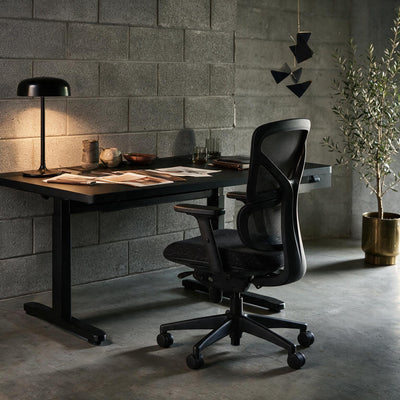
This guide covers what actually matters in an ergonomic office chair for long hours, how to evaluate the options available in South Africa, and why the Axis Ergonomic Chair is our top recommendation for serious long-hour desk workers.
What to look for in an ergonomic chair for long hours
Before getting to the product, it's worth establishing the criteria. A chair that genuinely supports long hours needs to do more than tick a basic ergonomics checklist. Here's what separates a long-hours chair from everything else.
Our top pick: the Axis Ergonomic Chair
Precision Italian mechanism. 12-point adjustability. BIFMA compliant. The Axis is engineered for long hours, demanding schedules, and the cumulative spinal load of a professional career spent at a desk.

Feature breakdown: what makes the Axis built for long hours
The Donati multifunction mechanism
The headline feature of the Axis is its Donati mechanism: an Italian-made multifunction tilt system that puts the Axis in a different category from most chairs at this price point. Donati is a specialist Italian manufacturer whose mechanisms are found in high-end ergonomic chairs internationally. The significance here is not just prestige — it's precision engineering in the part of the chair that matters most.
The multifunction mechanism gives you control over how the seat and backrest move together, how much resistance the recline applies, and where the backrest locks. This is what enables the kind of postural variation that, according to the Humanscale guide, transfers body weight to the backrest and significantly reduces spinal disc pressure. Most chairs at R 8,900 or under do not offer this level of mechanism quality.

12-point adjustability
The Axis offers 12 points of adjustment, the highest in the Workspace Dreams range. Every adjustment point addresses a genuine ergonomic need: seat height, seat depth, lumbar support height and depth, armrest height, armrest width, armrest angle, backrest recline, recline tension, recline lock position, headrest height, and headrest angle.
This level of adjustability means the Axis fits a wide range of body types properly. The recommended height range is 160–200 cm, covering a substantial spread of the South African population. For long hours, the further a chair can be dialled in to your specific body, the less compensatory muscular effort your body has to make across the day.
Advanced all-day lumbar support
The Axis's lumbar support is designed for sustained contact across a full workday, not just the first hour. The combination of adjustable height and depth means the lumbar pad can be positioned to sit precisely in the hollow of the lower back, maintaining the natural lordotic curve of the lumbar spine throughout the day.
The Allsteel Ergonomics and Design Reference Guide, drawing on BIFMA standards, notes that proper seated lumbar support should maintain the neutral, standing shape of the lower spinal area. This is what the Axis's advanced lumbar system is built to do: keep your spine in its natural "S" curve, hour after hour, so you're not fighting your own chair to maintain posture.

BIFMA compliant
The Axis carries BIFMA compliance, meaning it has been designed and manufactured to meet the ergonomic seating standards of the Business and Institutional Furniture Manufacturers' Association — the same standard used to validate seating in major international corporate environments. For anyone buying a chair for serious professional use, BIFMA compliance is meaningful third-party validation that the chair was built to genuine ergonomic specifications, not just marketed as ergonomic.
Built for the full range: 160–200 cm
The Axis is engineered to accommodate users from 160 cm to 200 cm effectively. Because there are 12 genuine points of adjustment, the chair can be correctly set up for both shorter and taller users without compromise. For corporate buyers fitting out teams with varied body types, this is particularly useful.

Axis quick-reference spec summary
| Feature | Axis Ergonomic Chair |
|---|---|
| Price | From R 8,900 |
| Adjustability | 12-point |
| Mechanism | Donati multifunction (Italian-made) |
| Lumbar support | Advanced, adjustable height and depth |
| Compliance | BIFMA |
| Recommended height | 160–200 cm |
| Warranty | 5 years |
| Best for | 8–10 hr workdays, professional long-hour use |
How does the Axis compare to the Pro Flow?
If you're looking at the Axis and wondering whether the step up from the Pro Flow Ergonomic Chair is worth it, here's the honest comparison.
The Pro Flow is the best-selling chair in the range for good reason. It offers 10 points of adjustment, a full synchro recline with multi-position lock, 4D armrests, adjustable lumbar support, and an integrated seat slider. It's genuinely excellent for anyone sitting 6–8 hours a day and covers most of what most people need.
The Axis is the step above that. Three differences justify the price gap:
Mechanism quality. The Donati system is a more refined, more precise piece of engineering than the Pro Flow's mechanism. Over 8–10 hours of daily use across years, this distinction compounds.
Adjustability ceiling. 12 points vs 10 means more fine-tuning, particularly for users at the taller or shorter ends of the height range who need more precise customisation.
BIFMA compliance. The Axis is tested and certified to international standards. The Pro Flow is not.
| Feature | Axis ★ | Pro Flow |
|---|---|---|
| Price | From R 8,900 | From R 5,900 |
| Adjustability | 12-point | 10-point |
| Mechanism | Donati multifunction (Italian) | Synchro recline, auto-tension |
| Lumbar | Advanced, adjustable H + D | Adjustable height |
| Armrests | Adjustable | 4D |
| BIFMA compliant | Yes | No |
| Warranty | 5 years | 7 years |
| Best for | 8–10 hr daily use | 6–8 hr daily use |

Who should buy the Axis
You sit 8 or more hours a day without exception. Not occasionally. Daily. Your chair is getting the kind of load that reveals the difference between a good mechanism and a great one.
You have existing back issues or are actively trying to prevent them. The advanced lumbar system and BIFMA-compliant build are specifically valuable for people who need their chair to do real therapeutic or preventative work.
You're making a long-term investment. The Axis is not the chair you replace in two years. It's the chair you set up correctly, dial in to your body, and use for a decade. Viewed across that timeframe, R 8,900 is not a premium. It's a reasonable price for occupational equipment.
You're a business equipping senior staff or executives. For roles where someone is at their desk for the majority of their working day, the Axis justifies its position in the range. For businesses looking to equip teams, contact us for volume pricing and installation options.
Frequently asked questions
For people sitting 8–10 hours a day, the Axis Ergonomic Chair from Workspace Dreams is the top recommendation. It features a Donati multifunction mechanism made in Italy, 12-point adjustability, advanced all-day lumbar support, and BIFMA compliance, covering users from 160–200 cm. The Pro Flow Ergonomic Chair is an excellent alternative for those sitting 6–8 hours daily at a lower price point.
BIFMA stands for the Business and Institutional Furniture Manufacturers' Association, which sets internationally recognised standards for ergonomic seating. A BIFMA-compliant chair has been designed and tested to meet specific measurements for seat height, seat depth, seat width, backrest height, lumbar positioning, and armrest dimensions — all benchmarked against the anthropometric needs of 5th to 95th percentile adults. For buyers investing in a chair for daily professional use, BIFMA compliance is meaningful evidence that the chair was built to genuine ergonomic specifications, not just marketed as ergonomic.
Donati is an Italian manufacturer specialising in precision chair mechanisms. The Donati multifunction mechanism used in the Axis controls the synchronised movement of the seat and backrest, recline resistance, and multi-position lock. The significance is in the quality and precision of the engineering: a well-made multifunction mechanism allows natural postural variation throughout the day, which research shows reduces spinal disc pressure and fatigue. Most chairs at similar price points use generic mechanisms. The Donati is a specific, higher-quality component that distinguishes the Axis from the majority of chairs in its price band.
For 8–10 hour daily use, 10–12 adjustment points covering all genuine postural needs is the appropriate benchmark. The key adjustments are: seat height, lumbar height and depth, seat depth, armrest height and width, recline tension and lock position, and backrest height. The Axis Ergonomic Chair offers 12-point adjustability across these exact areas. The more the chair can be fine-tuned to your specific body dimensions, the less compensatory muscular load your body has to carry across the day.
For someone sitting 8–10 hours a day, yes. Research published in the journal Ergonomics links poor seating directly to back pain, neck and shoulder problems, and fatigue in desk workers. The physical and productivity cost of an inadequate chair compounds over years. The Axis at R 8,900 is a long-term investment in occupational health. For people sitting shorter hours, the Flow Chair or Pro Flow offer strong ergonomic support at a lower price point.
The bottom line
There are a lot of chairs marketed as ergonomic. Very few are engineered to perform across a 10-hour workday, day after day, for years.
The Axis Ergonomic Chair earns its position at the top of the Workspace Dreams range through specific, verifiable engineering choices: a precision Italian mechanism, 12-point adjustability, BIFMA compliance, and advanced lumbar support designed for sustained daily use. It's not the right chair for everyone, but for anyone sitting 8–10 hours a day who takes their physical health and professional performance seriously, it is the right chair for South Africa.


