





Should I Get a Standing Desk for My Home Office?
You've been working from home for a while now. And somewhere around 2pm every day, the same thing happens: you're glued to your chair, your body's gone stiff, your brain's gone foggy, and you'd give anything to just… not be sitting anymore. But getting up means breaking your flow, so you stay put and push through.
That exact feeling is why people ask this question. So, should you get a standing desk for your home office? Let's talk about it honestly — real research, no hype — and figure out if it's actually worth it for you.

The Honest Short Answer
You've seen the breathless claims: standing desks melt fat, fix your heart, triple your productivity. The actual research is more measured than that, and we're going to be straight with you about it. But here's the thing — once you strip away the hype, there's a genuinely good case for a standing desk, and it comes down to one simple idea: your body isn't built to hold one position all day.
Let's go through the real reasons — the ones backed by actual studies — so you can decide for yourself.
You Get to Escape Your Chair Without Breaking Your Flow
This is the big one, and it's the reason most home workers actually fall in love with a standing desk.
Think about that 2pm feeling again. You're stiff, you're restless, you want out of your chair, but standing up and walking away means losing your momentum. A standing desk solves that exact problem. You hit a button, the desk rises, and you keep working — standing up, no flow broken. You've changed your whole physical state without stopping what you're doing.
That's not a small thing. It means you can answer the urge to move without sacrificing focus, which is the thing that makes a home workday feel less like a sentence and more like something you can actually sustain.
A standing desk lets you break the sitting spell without breaking your workflow. That alone changes how a home workday feels.
It's the Best Tool for Beating "Stuck in One Position" Syndrome
Here's what the research actually says, and it's important. The real villain isn't sitting specifically — it's staying in any one static position for hours.
A comprehensive scoping review of 53 studies, published in Applied Ergonomics (Chambers, Robertson & Baker, 2019), makes this exact point: prolonged static postures, both sitting AND standing, are associated with poor health. The benefit of a sit-stand desk lies in its ability to encourage you to change position and reduce time spent frozen in any single one.
And it works. The same review found that sit-stand desks reliably change behaviour — people using them genuinely sit less and move more throughout the day (61% of behavioural results across the studies were significant). That's the whole point. Not "stand instead of sit," but "stop being a statue."
The magic isn't standing — it's alternating. A standing desk is the tool that makes switching positions effortless enough that you'll actually do it.
It Genuinely Helps With Aches and Discomfort
If there's one benefit the research is most confident about, it's this one.
That same Applied Ergonomics review of 53 studies found that sit-stand desks were most effective in the discomfort domain — this was their clearest, most consistent win. People using them reported less of the aching, stiffness, and general bodily discomfort that comes with being chained to a chair all day. There's even a specific finding for the lower back: one study in the review found that working in a sit-stand pattern was associated with reduced lumbar flexion compared to sitting alone, which points to real potential to ease low-back strain.
For a home worker who finishes most days feeling like a folded deckchair, that's a benefit you'll feel in your body, not just read about.
Of all the claims made about standing desks, "reduces discomfort" is the one with the strongest evidence behind it. If you ache at your desk, this helps.
It Can Lift Your Energy and Mood (Which Matters More at Home)
Working from home has a hidden challenge: isolation and stagnation. When you're not walking to meetings or moving around an office, the day can flatten out, physically and mentally.
Changing position through the day helps counter that. Research on desk workers has linked reducing sitting time to increased vitality and work engagement, and a study of call-centre employees at Texas A&M University found significant improvements in mood scores among those using standing desks. The mechanism makes intuitive sense: standing boosts circulation, resets your physical state, and breaks the mental fog that builds up when you've been hunched in the same spot for three hours.
For remote workers especially, that little jolt of "I feel more awake and engaged" can be the difference between a productive afternoon and a write-off one.
Beyond the physical, a standing desk can genuinely lift your energy and mood through the day — and that hits harder when you're working solo at home.

An Honest Word on Productivity and Health (What NOT to Expect)
We promised honesty, so here it is. A few of the popular claims are oversold, and knowing that actually helps you buy for the right reasons.
- Don't expect a productivity explosion. The research on work performance is lukewarm — in that big review, only 7% of work-performance results were significant. A standing desk won't hurt your output (and the energy and focus boost above is real), but it's not a magic productivity hack.
- Don't expect weight loss or a heart-health miracle. The review found only "modest cardiometabolic health benefits." Standing burns marginally more calories than sitting, but nowhere near enough to replace exercise. And critically, standing all day is not the goal — it carries its own downsides. This is a tool for variation, not a substitute for moving your body properly.
Buy a standing desk to feel less stiff, move more, and stay energised — not to lose weight or become a productivity machine. Right expectations, right reasons, no disappointment.

So, How Do You Actually Use One Properly?
If you do get one, the golden rule is simple: alternate, don't just stand. Cornell University's Dr. Alan Hedge recommends a rhythm of roughly 16 minutes sitting, 8 minutes standing, and 2 minutes moving every half hour. Standing all day is as hard on your body as sitting all day, so the whole game is variation.
Dr. Hedge's half-hour rhythm:
A few practical tips: get an electric desk with memory presets so switching positions takes one button press (friction is what kills the habit), keep your screen at eye level whether sitting or standing, and start with shorter standing periods and build up. For the full breakdown, our complete standing desk guide walks through it.

Okay, I'm In. Which Standing Desk Should I Get?
If the honest case has won you over, the two things that matter most are effortless adjustment (so you actually use it) and the right height for your body.
Sit-Stand Desk Pro
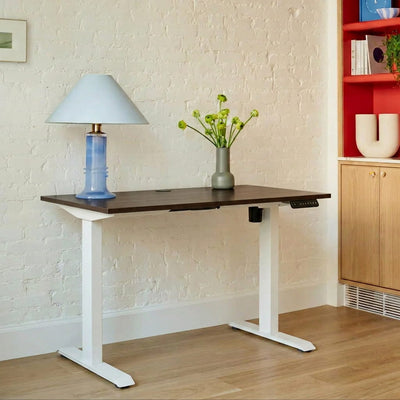
from R13,100Our best-selling Sit-Stand Desk Pro is a dual-motor electric desk with programmable presets — exactly the one-button-press ease that keeps the sit-stand habit alive. The default pick for most South African home offices.
Pro Lift
from R12,100The robust Pro Lift is also a dual-motor electric desk with memory presets, built for effortless daily switching between sitting and standing.
QuickStand (Manual)
from R4,347Want to try sit-stand without the electric price tag? The manual QuickStand gets you into it for less — a smart way to test the habit before committing to an electric desk.
Not sure which fits your space, height, and budget? Take our quick Find Your Fit quiz, or browse the full standing desk range. Want to talk it through? Get in touch — we'll give you an honest recommendation, even if it's the cheaper desk.
Frequently Asked Questions
Should I get a standing desk for my home office?
For most home workers, yes — if you buy it for the right reasons. The strongest research evidence shows standing desks reduce physical discomfort and successfully help you sit less and move more throughout the day, which is exactly what a static home-office routine needs. They're especially valuable for remote workers because they let you escape your chair and change your physical state without breaking your workflow. Just don't expect major weight loss or heart-health benefits — the research shows those are modest. Buy one to feel less stiff and more energised, and it's genuinely worth it.
Are standing desks actually worth it for working from home?
Yes, for people who sit long hours and want to reduce aches and stagnation. A scoping review of 53 studies found sit-stand desks are most effective at reducing discomfort and reliably reduce sitting time. For remote workers, who lack the natural movement of an office, that benefit is even more relevant. The value depends on using it correctly — by alternating between sitting and standing rather than doing either all day. Used well, it's a worthwhile investment in comfort and daily energy; used as a permanent standing station, it loses much of its benefit.
Do standing desks improve productivity?
Modestly, and indirectly. Research on work performance specifically is lukewarm — in one major review, only 7% of work-performance results were significant. However, standing desks can improve energy, focus, and mood, which indirectly supports better work, and studies have linked reduced sitting time to increased work engagement and vitality. So a standing desk won't magically triple your output, but by keeping you more energised and comfortable, it can help you sustain focus through the day, particularly the dreaded afternoon slump.
How long should I stand at a standing desk?
The key is to alternate rather than stand continuously. Cornell University's Dr. Alan Hedge recommends roughly 16 minutes sitting, 8 minutes standing, and 2 minutes moving every half hour. Start with shorter standing periods (15–30 minutes at a time) and build up gradually. The goal is to avoid staying in any single position for too long — standing all day is as hard on your body as sitting all day, so frequent position changes matter more than long standing stretches.
Is it better to have an electric or manual standing desk for a home office?
It depends on how often you'll change position. An electric standing desk with memory presets makes switching between sitting and standing effortless (one button press), which matters because friction is the main reason people stop using the standing function. For frequent adjusters and full-time home workers, electric is worth it. A manual desk like the QuickStand is more affordable and fine if you'll realistically adjust only once or twice a day. Since the benefit comes from actually alternating positions, the easier your desk makes that, the more value you'll get.
The Bottom Line
Should you get a standing desk for your home office? If you're the person who hits 2pm stiff, restless, and desperate to escape your chair, the honest answer is yes. Not because it'll melt fat or turn you into a productivity superhero — the research doesn't back those claims — but because it solves a real problem: it lets you break the sitting spell, move more, ache less, and stay energised, all without breaking your workflow.
Your body isn't built to hold one position for eight hours. A standing desk is the simplest tool for giving it the variation it's quietly been asking for. Buy it for that, use it by alternating rather than standing all day, and it'll earn its place in your home office.
Ready to escape your chair?
We'll help you find the right standing desk for your home setup.
Take the Find Your Fit Quiz Browse Standing Desks


