





Standing Desk Health Benefits: What the Research Actually Shows (and Why)
Search "standing desk health benefits" and you'll drown in the same recycled bullet points: better circulation, less back pain, more energy. Rarely does anyone explain why. And without the why, it's just a list you can't trust.
So let's do this properly. Here are the genuine, research-backed health benefits of a standing desk, with the actual science explaining how each one works — plus an honest look at what's oversold. This is the answer you were looking for.

First, Why Sitting All Day Is the Problem
To understand the benefits of a standing desk, you first need to understand what it's solving. And the honest answer is: prolonged, uninterrupted sitting does measurable things to your body, fast.
The Mayo Clinic reports that an analysis of 13 studies covering over a million people found that those who sat more than eight hours a day with no physical activity had a risk of dying similar to that posed by obesity and smoking. Excessive sitting is linked to a cluster of conditions — raised blood pressure, high blood sugar, unhealthy cholesterol, and excess abdominal fat — known as metabolic syndrome. And the research is stark: people who sit 8 to 11 hours a day have a 15% higher risk of death over the following three years than those who sit under four hours (van der Ploeg et al., cited in Applied Ergonomics, 2019).
Here's the crucial insight the best research makes, though: the villain isn't sitting specifically — it's staying in any one static position for hours. As the landmark scoping review in Applied Ergonomics (Chambers, Robertson & Baker, 2019) puts it, prolonged static postures, both sitting AND standing, are associated with poor health. A standing desk's real power is that it lets you alternate, breaking up those long static stretches. That's the foundation for every benefit below.
Better Circulation (and Why It Actually Happens)
This is the benefit everyone lists and nobody explains. Here's the real mechanism.
When you sit for a long time, blood flow to your lower limbs is markedly suppressed — partly because of the bends (arterial angulation) created by the seated posture, and partly because your leg muscles go completely inactive. Those inactive muscles are the problem: your leg muscles act as a "muscle pump" that squeezes your veins and pushes blood back up toward your heart. When you sit still, that pump switches off, blood pools in your legs, and venous return slows down (peer-reviewed vascular research, PMC). Over just three hours of uninterrupted sitting, this pooling measurably raises blood pressure by increasing sympathetic nerve activity and peripheral resistance.
How a standing desk helps: Standing and shifting your weight reactivates the leg-muscle pump. Your calves and thighs contract, squeeze the veins, and get blood moving back up your body again. It's not magic — it's mechanics. Every time you rise from sitting to standing, you switch the pump back on.
Anyone who finishes the day with heavy, swollen, or achy legs. This is the circulation benefit made real.

Reduced Lower Back Pain (the Mechanism, Not the Cliché)
"Standing desks help back pain" is repeated endlessly. Here's precisely why it's true.
When you sit, especially slumped in an unsupported chair, pressure on the intervertebral discs in your lower spine rises significantly. Research published in the journal Ergonomics (Professor Hetinger's work) directly links static sitting in poorly designed chairs to back pain in 57% of desk-based cases, and explains the mechanism: constant strain on the muscles and increased pressure on the discs. Your lower back simply wasn't built to hold a flexed, loaded position for eight hours straight.
A standing desk breaks that up. One study within the Applied Ergonomics review found that working in a sit-stand pattern was associated with reduced lumbar flexion during sitting compared to sitting alone, which the researchers noted could reduce pain or injury risk in the lower back. In plain terms: alternating positions stops your lumbar spine from being locked in one loaded posture all day, giving your discs and muscles relief.
Anyone whose lower back aches by mid-afternoon. (For a deeper dive, see our guide on what actually helps back pain at a desk.)

Less Discomfort and Fatigue (the Best-Evidenced Benefit)
If there's one area where the research is genuinely confident, it's this one — and it's worth taking seriously.
In the Applied Ergonomics scoping review of 53 studies, sit-stand desks were most effective in the discomfort domain (43% of discomfort results were significant, the strongest of any category). And for fatigue specifically, 63% of results were significant. That's a strong signal in a field where most interventions struggle to show much at all.
Why it happens: Discomfort and fatigue build up when your muscles hold the same position for hours — static load with no relief. Changing position redistributes that load, works different muscle groups, and gives the overworked ones a break. Add the circulation boost from Benefit 1 (more blood, more oxygen to your muscles and brain) and you get the "less foggy, less stiff, more awake" feeling people describe.
Basically every desk worker who hits an afternoon slump or finishes the day feeling like a folded deckchair. This is the benefit you'll actually feel.
Better Blood Sugar Control After Meals
This one's less famous but genuinely important, and the mechanism is fascinating.
Your muscles are major consumers of glucose (blood sugar). When you eat, glucose enters your bloodstream, and your muscles help pull it out and use it for energy. But here's the catch: they do this far more effectively when they're active. When you sit still after a meal, your leg muscles are inactive, glucose absorption slows, and more sugar stays circulating in your blood — contributing to the post-meal spikes linked to insulin resistance over time (research published in Diabetologia and related journals).
The clever part: muscle contraction drives glucose uptake through a pathway that doesn't even need insulin. So simply activating your leg muscles — by standing and shifting — helps your body clear blood sugar more efficiently. Studies show that interrupting prolonged sitting with standing or light activity measurably improves post-meal glucose control.
Everyone, but especially anyone managing or at risk of type 2 diabetes or metabolic issues. Standing after lunch is a genuinely smart move.
Slightly More Energy Burned (Let's Be Honest About the Numbers)
You'll see standing desks sold as weight-loss tools. Here's the honest version.
Standing does burn more energy than sitting, but the Applied Ergonomics review is clear-eyed about how much: increases ranged from roughly 4.2 to 10 extra calories per hour, with heart rate rising by about 7.5 to 13.7 beats per minute when standing. Notably, the biggest effect was seen in overweight and obese populations.
The honest takeaway: That's real, but it's modest — nowhere near enough to replace exercise or drive meaningful weight loss on its own. The same review found no significant changes in obesity measures in healthy adults. So a standing desk is a small, helpful nudge to your daily energy expenditure, not a fat-burning machine. Buy it for circulation, comfort, and movement, and treat the extra calorie burn as a minor bonus.
Everyone slightly, but nobody should expect the scale to move from standing alone.

More Movement and Posture Variety
This is the benefit that ties all the others together, and it's the one the research is most confident about.
The Applied Ergonomics review found that sit-stand desks are genuinely effective at changing behaviour — 61% of behavioural results were significant, with people reliably sitting less and standing more. Another study found increased upper-body posture variability during sit-stand desk use compared to sitting alone.
Why this matters so much: Remember the founding principle — the enemy is static posture, whether sitting or standing. A standing desk's greatest health benefit isn't standing itself; it's that it makes changing position easy, so you spend less time frozen in any single posture. More variety means less repetitive strain on any one set of muscles, joints, and discs. It's the mechanism underneath the circulation, back, discomfort, and blood-sugar benefits all at once.
Everyone. This is the core of why standing desks work.

An Honest Word: What a Standing Desk Won't Do
Being a trustworthy source means telling you where the hype outruns the evidence:
- It won't melt fat. The calorie burn is modest and the research shows no meaningful weight-loss effect from standing alone.
- It won't fix your heart on its own. The Applied Ergonomics review found cardiovascular improvements were inconsistent and, when present, generally not clinically important.
- It won't triple your productivity. Only 7% of work-performance results in the review were significant.
- Standing all day is NOT the goal. It carries its own risks (leg and vein strain), and can even worsen wrist posture. The benefit is in alternating.
None of this undermines the real benefits above. It just means you should buy a standing desk for the right reasons — movement, circulation, comfort, back relief, and blood-sugar control — not the oversold ones.
How to Get These Benefits (Use It Right)
Every benefit above depends on one thing: alternating, not standing all day. Cornell University's Dr. Alan Hedge recommends roughly 16 minutes sitting, 8 minutes standing, and 2 minutes moving every half hour.
Dr. Hedge's half-hour rhythm:
A few practical tips:
- Get an electric desk with memory presets so switching takes one button press (friction kills the habit).
- Keep your screen at eye level whether sitting or standing.
- Shift your weight and take short walks — don't stand rigidly.
- Build up standing time gradually.
For the full setup, see our complete standing desk guide.

Getting a Standing Desk in South Africa
If the benefits have won you over, the key is a desk that makes alternating effortless.
Sit-Stand Desk Pro
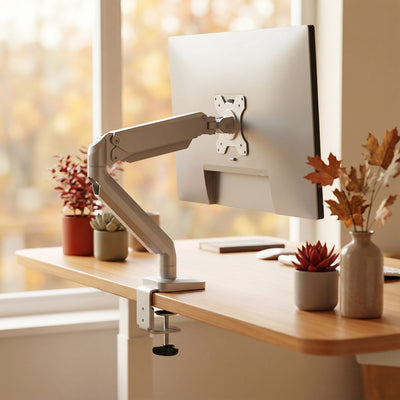
from R13,100Our best-selling Sit-Stand Desk Pro is a dual-motor electric desk with programmable presets — the one-button ease that keeps the sit-stand habit alive.
Pro Lift
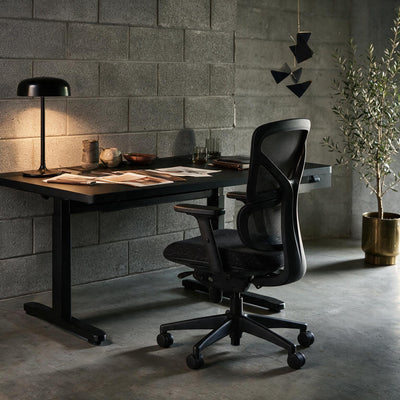
from R12,100The robust Pro Lift is also a dual-motor electric desk with programmable presets, built for effortless daily switching between sitting and standing.
QuickStand (Manual)
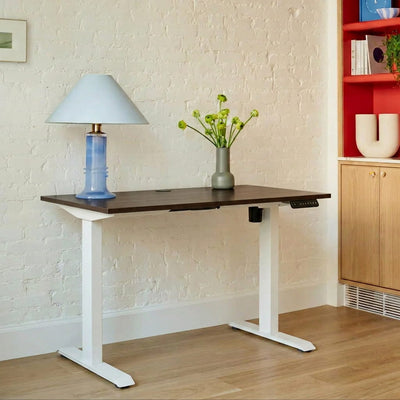
from R4,347Want to test the waters affordably? The manual QuickStand gets you started with sit-stand for less.
Not sure which fits your space and budget? Take our Find Your Fit quiz, browse the full range, or get in touch.
Frequently Asked Questions
What are the health benefits of a standing desk?
The research-backed benefits of a standing desk include improved circulation (by reactivating the leg-muscle pump that moves blood back to the heart), reduced lower back pain (by breaking up the static, disc-loading posture of prolonged sitting), less discomfort and fatigue (the best-evidenced benefit, with 43% of discomfort and 63% of fatigue results significant in a major review), better post-meal blood sugar control (active leg muscles absorb glucose more efficiently), and greater movement and posture variety. The core benefit is that a standing desk makes it easy to alternate positions, which reduces the time spent frozen in any single static posture — the real driver behind sitting-related health problems.
Why do standing desks improve circulation?
When you sit for long periods, blood flow to your legs is suppressed and your leg muscles — which normally act as a "pump" that squeezes your veins and pushes blood back toward your heart — go inactive. This causes blood to pool in your lower limbs and slows circulation. Standing and shifting your weight reactivates those leg muscles, switching the pump back on and getting blood moving again. So a standing desk improves circulation through a simple mechanical process: active leg muscles restore the blood flow that prolonged sitting shuts down.
Do standing desks actually help with back pain?
Yes, and the mechanism is well understood. Prolonged sitting, especially slumped in an unsupported chair, significantly increases pressure on the intervertebral discs in your lower spine, and research links static sitting directly to back pain in the majority of desk-based cases. A standing desk lets you break up that loaded, flexed posture. One study found that working in a sit-stand pattern was associated with reduced lumbar flexion during sitting compared to sitting alone, suggesting real potential to relieve lower-back strain. The benefit comes from alternating positions rather than staying locked in one all day.
Can a standing desk help with blood sugar?
Yes, particularly after meals. Your muscles absorb glucose from your bloodstream more effectively when they're active. When you sit still after eating, your leg muscles are inactive and glucose clearance slows, leaving more sugar circulating in your blood. Muscle contraction drives glucose uptake through a pathway that doesn't even require insulin, so simply standing and activating your leg muscles helps your body manage post-meal blood sugar more efficiently. Research shows interrupting prolonged sitting with standing or light activity measurably improves post-meal glucose control.
Do standing desks help you lose weight?
Only marginally. Standing burns more calories than sitting, but research shows the difference is modest — roughly 4 to 10 extra calories per hour — and studies found no significant weight-loss effect from standing alone in healthy adults. A standing desk is a small, helpful nudge to daily energy expenditure, not a weight-loss tool. Its genuine health benefits lie in improved circulation, reduced discomfort and back strain, better blood sugar control, and increased movement — not in burning significant calories. For weight loss, actual exercise remains essential.

The Bottom Line
The health benefits of a standing desk are real, but they're specific — and understanding why they work is what separates genuine information from recycled fluff. A standing desk improves circulation by reactivating your leg-muscle pump, eases back pain by breaking up disc-loading static posture, reduces discomfort and fatigue (its best-evidenced benefit), helps your muscles manage blood sugar, and, above all, makes it easy to keep moving and changing position throughout the day.
What it won't do is melt fat, fix your heart on its own, or replace exercise. Buy it for the real, mechanism-backed benefits, use it by alternating rather than standing all day, and a standing desk becomes one of the smartest health upgrades a desk worker can make.
Ready to feel the difference?
We'll help you find the right standing desk for your setup.
Take the Find Your Fit Quiz Browse Standing Desks


